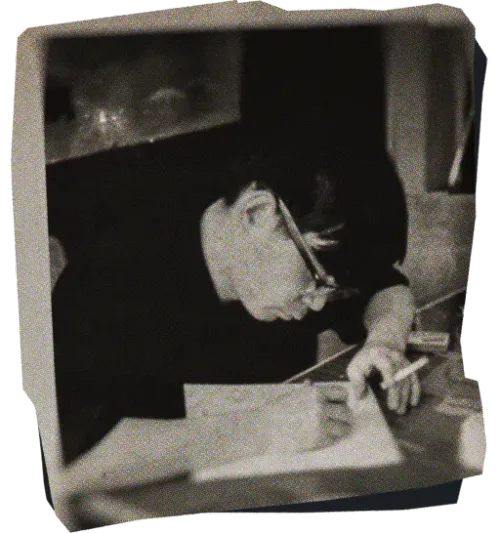
L'esprit de la nature
If I wanted to name a person who has influenced me and changed the way I see the world, I would say, without hesitation, Hayao Miyazaki. As a child and as an adult, I've nurtured the worldview of this man right up until this moment, as I'm writing this.
Nature and Humanity
As always, I opened Arte and was looking for something not too long to watch, when I came across a documentary called Miyazaki, l’esprit de la nature.
I’ve seen documentaries about Miyazaki before and watched nearly all the films he’s directed, but this one caught my attention especially because of how it portrayed Miyazaki as a storyteller for whom nature plays a central role.
Miyazaki is, in my opinion, an avid observer, and that’s the key to his storytelling. He observes, and observes, and observes, until he feels an urge to express his own take. In those takes, I love the recurring themes of nature and its connection to humanity, and that’s the lens this 80-minute documentary takes too.
A Failure or Materpiece ?
It was last year that I discovered Lupin III: The Castle of Cagliostro. It was made in 1979, six years before Studio Ghibli was even founded in 1985. The first time I saw the shots, I could already recognize Miyazaki’s still-developing art style, so I watched it with more interest, curious to learn about the pre-Ghibli Miyazaki.
Watching the documentary now, I learned that at the time, The Castle of Cagliostro was actually seen as a failure. After that setback, he went on to spend some time in Los Angeles trying to work with Hollywood, but it wasn’t what he actually wanted, he couldn’t express his ideas the way he needed to.
At that point, Miyazaki genuinely considered giving up animation altogether when he returned to Japan.
It was strangely reassuring to see that even Miyazaki (someone whose work feels so assured) once doubted whether to continue at all.
I strongly recommend watching this documentary. It covers his journey, and how Nausicaä of the Valley of the Wind and his later works reshaped the way we can see the world, and gave us a better sense of what it can be.